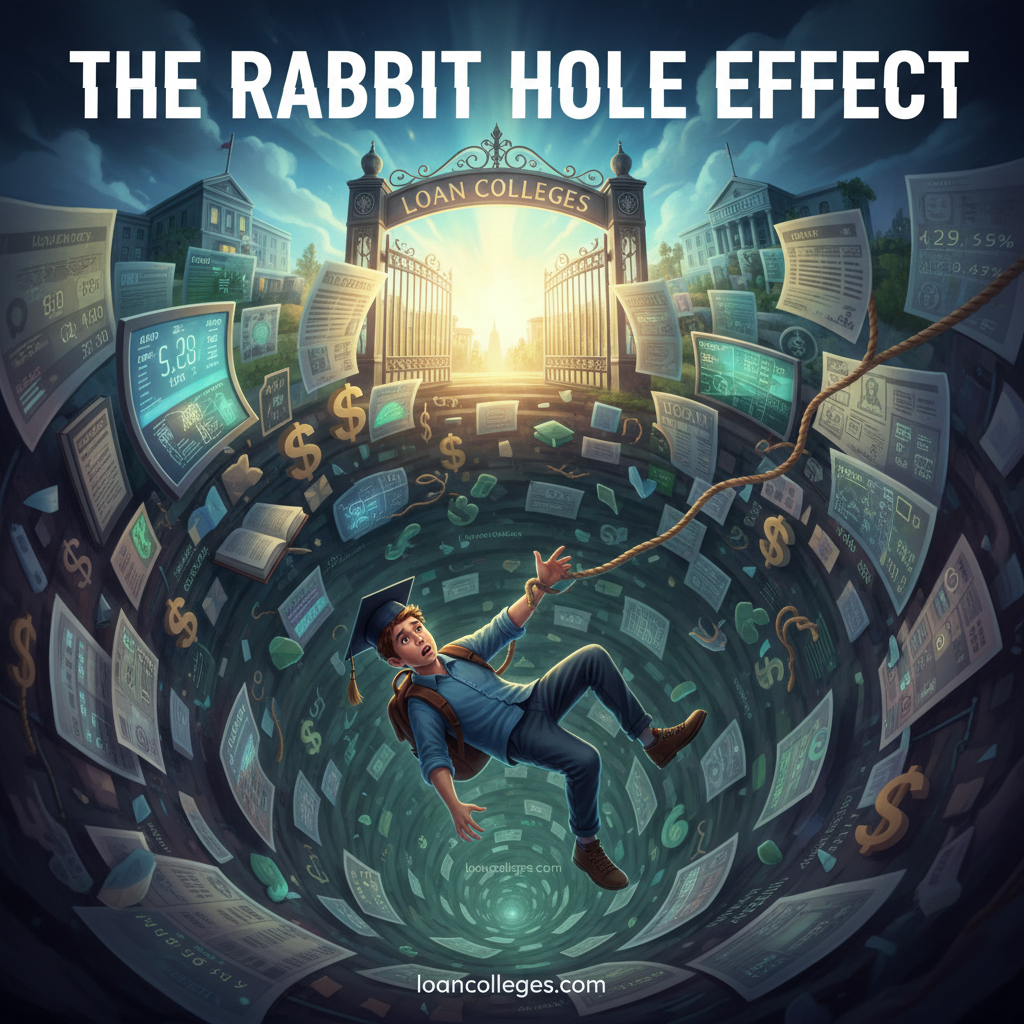

The Rabbit Hole Effect: Why Loan Colleges Feel Like the Only Option
Most people don’t choose loan-driven colleges.
They slide into them.
Not because they’re careless, but because the system is designed to make one path feel inevitable while all others quietly disappear.
This is the rabbit hole effect: once you step in, every turn seems logical, necessary—even responsible—until you realize you’re far deeper than you ever intended to go.
Step One: The Narrowing of Possibility
It usually starts with pressure.
A degree is framed as non-negotiable. Family expectations, job requirements, social status, and economic fear all point in the same direction: without higher education, you will fall behind.
But affordable options are limited. Public universities are competitive. Scholarships are uncertain. Community colleges are often dismissed as “not enough.”
What remains are institutions that promise certainty.
Loan colleges don’t say they are expensive. They say they are accessible.
Step Two: Access Disguised as Opportunity
The language matters.
“Anyone can enroll.”
“No upfront payment.”
“Flexible financing.”
“Loans are part of the process.”
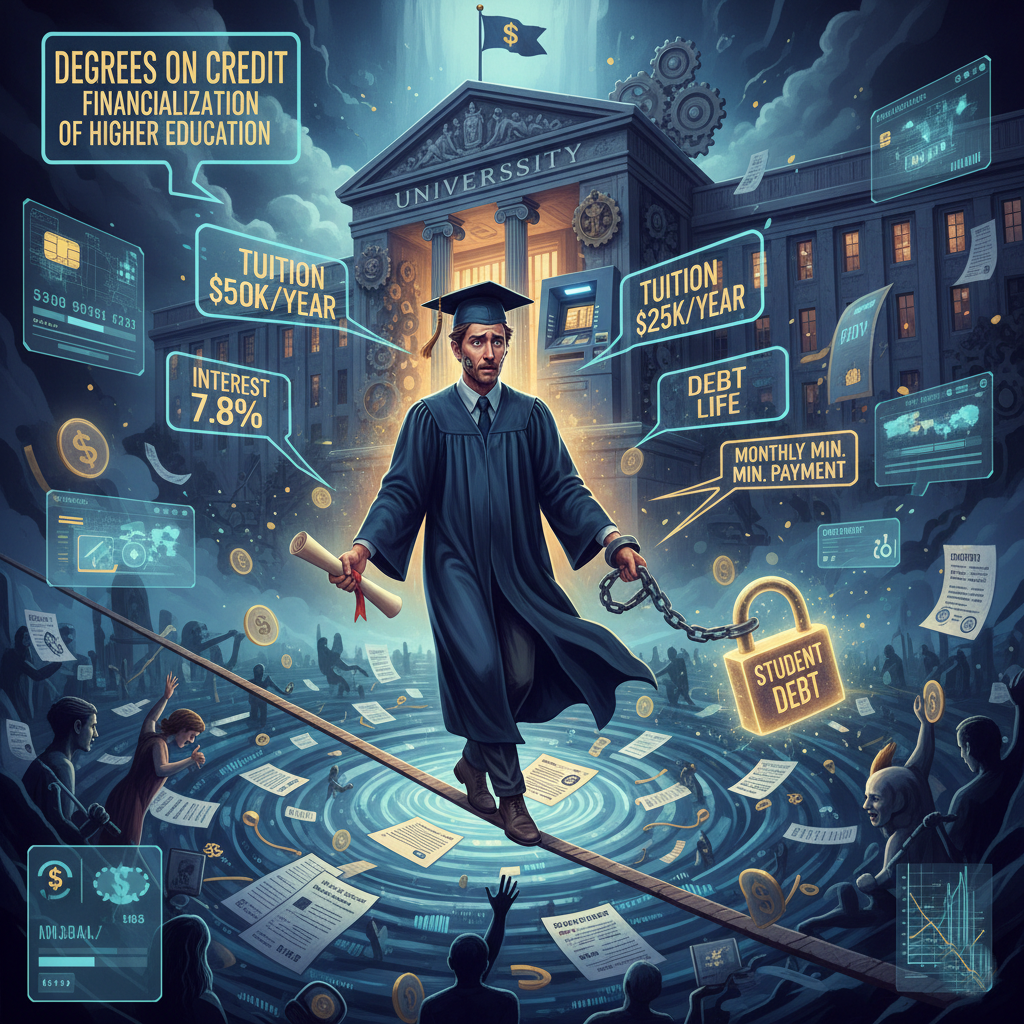
By the time money is discussed, the decision already feels made. The loan isn’t presented as a risk—it’s framed as a bridge, a formality, a smart investment in your future.
You’re not choosing debt.
You’re choosing progress.
That framing is powerful, especially for people who feel stuck.
Step Three: Speed Replaces Reflection
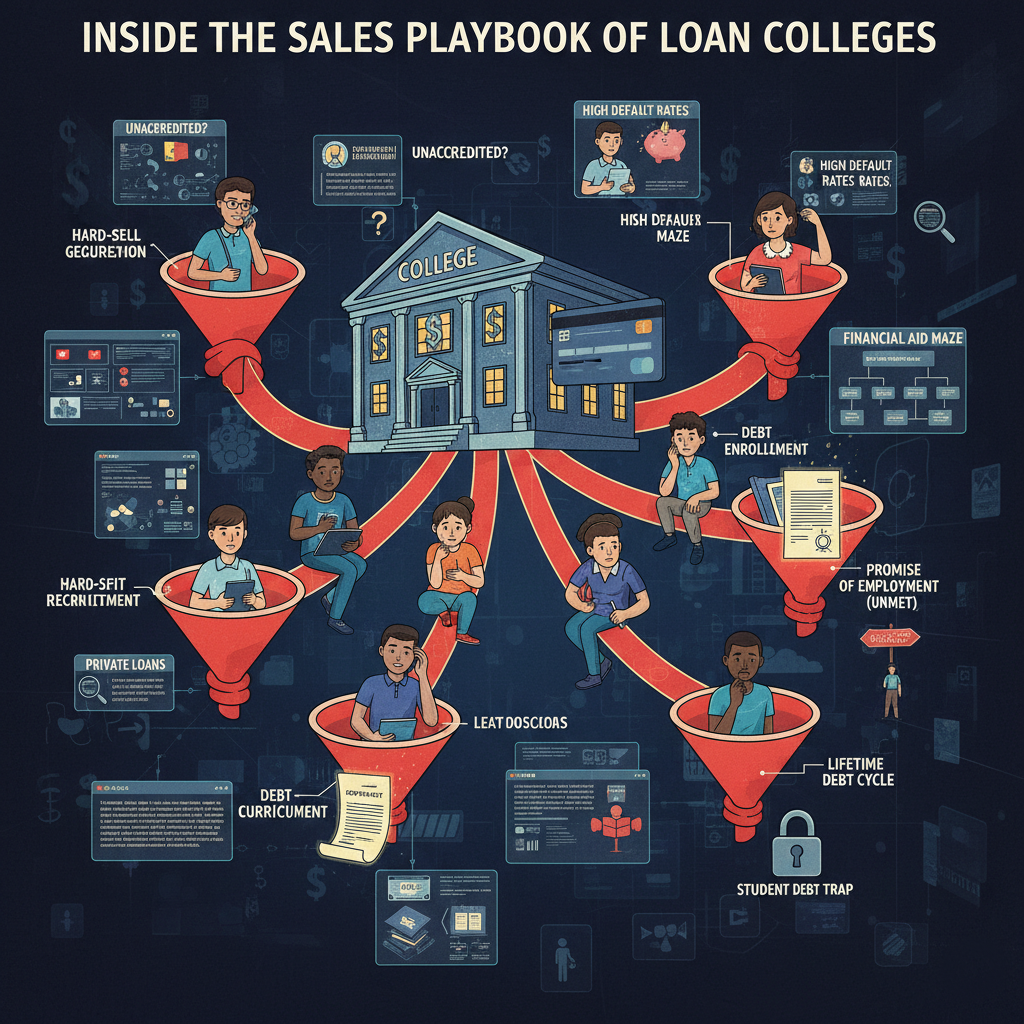
One of the most effective features of the rabbit hole is urgency.
Enrollment deadlines. Limited slots. Advisors calling daily. Paperwork that arrives pre-filled. Decisions that must be made now, before doubt has time to surface.
Speed kills comparison.
By the time someone thinks to ask about outcomes, job placement, or long-term repayment, the loan is already signed and the system has moved on.
Step Four: Isolation After Enrollment
Once inside, support often fades.
The recruiter becomes unreachable. Academic advising is minimal. Career services are vague. But the loans remain very real and very active.
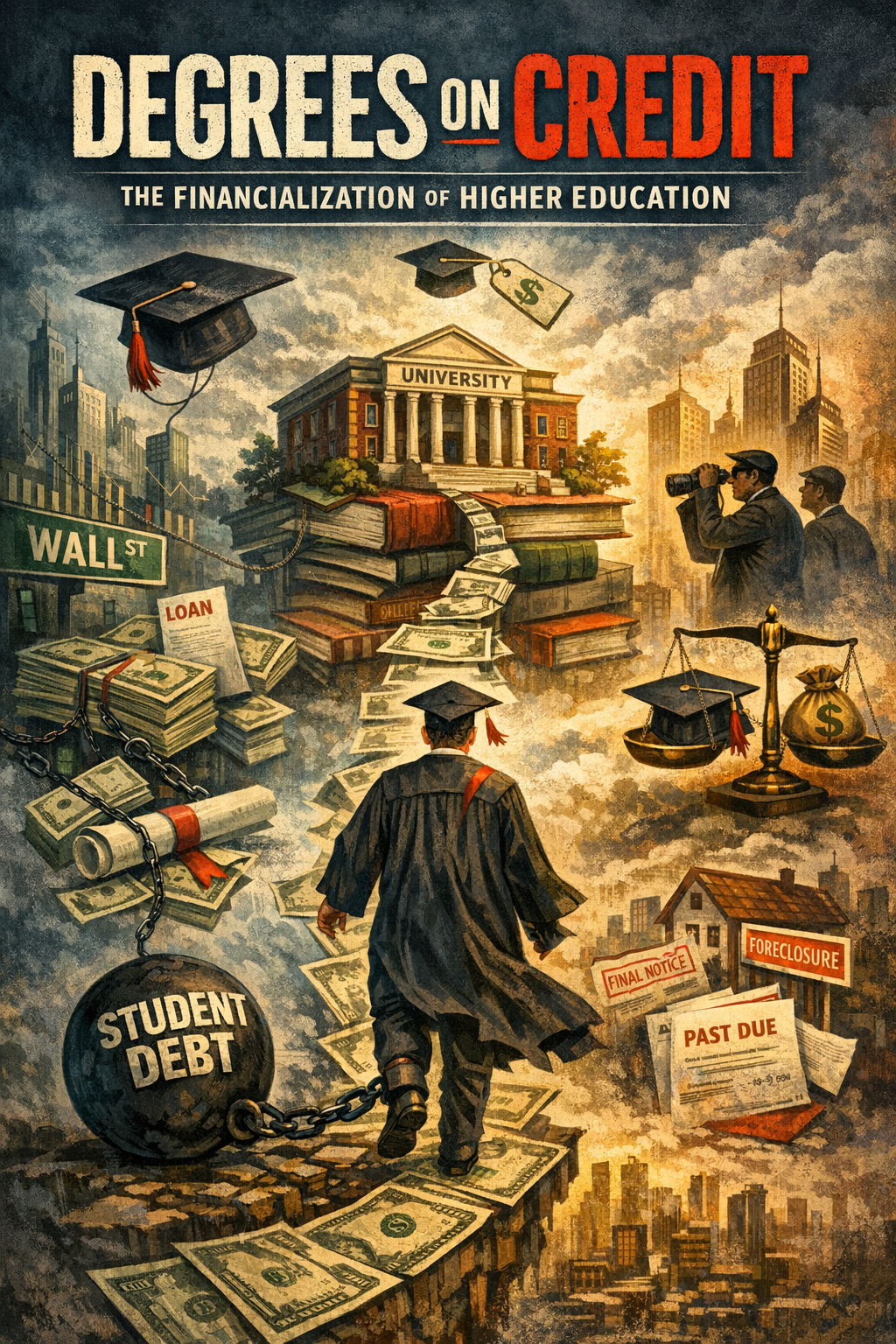
At this stage, leaving feels worse than staying. Dropping out doesn’t erase debt—it just removes the degree that was supposed to justify it.
This is the psychological lock:
Continue and hope it works, or leave and guarantee the loss.
Most people continue.
Step Five: Debt as a Moral Obligation
The deeper truth of the rabbit hole is cultural.
Student debt is framed not as a systemic failure, but as a personal responsibility. Struggle is individualized. Regret is internalized.
If things don’t work out, the borrower is told they chose poorly, studied the wrong field, or didn’t try hard enough.
The system remains blameless.
Why Alternatives Feel Invisible
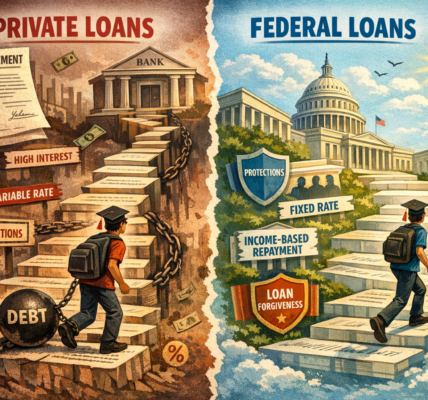
There are alternatives—vocational training, apprenticeships, employer-sponsored education, community colleges, online certificates—but they are rarely marketed with the same emotional intensity.
Loan colleges sell identity, not just credentials.
They sell the idea of moving forward when standing still feels terrifying.
In moments of uncertainty, certainty—no matter how costly—feels like safety.
The Real Trap Isn’t the Loan
The real trap is the illusion of choice.
When every message says education is mandatory, time is running out, and loans are normal, the decision stops feeling like a decision at all.
It feels like compliance.
Climbing Back Out
Understanding the rabbit hole effect doesn’t mean blaming individuals. It means recognizing how fear, urgency, and debt are woven into a system that presents borrowing as the only rational move.
Real choice requires:
- transparent outcomes
- slower decisions
- affordable pathways
- and a cultural shift away from equating debt with ambition
Until then, loan colleges will continue to feel like the only option—not because they are, but because everything else has been quietly pushed out of view.
And that’s how the rabbit hole stays open.