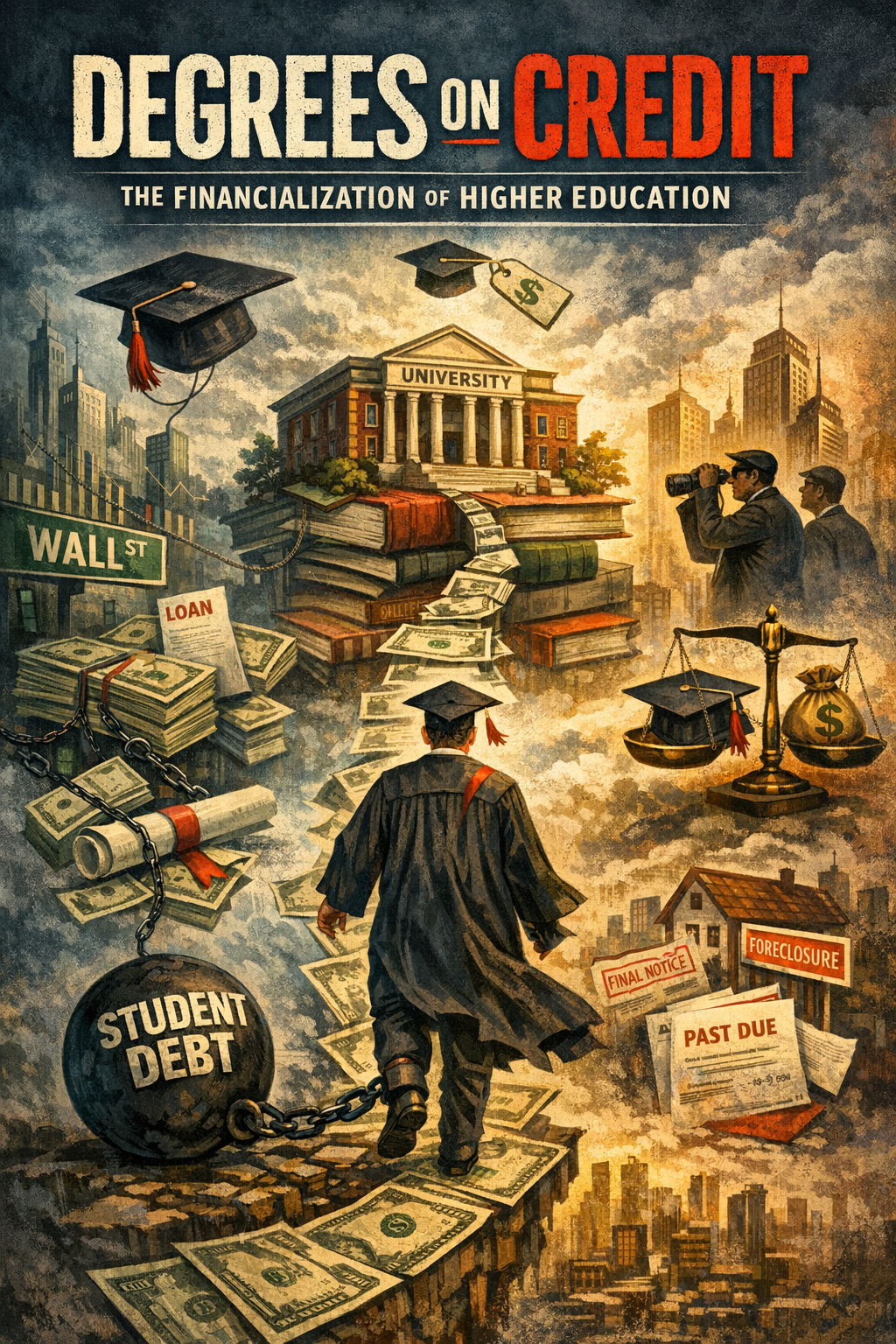

At the beginning, there is hope.
It arrives folded neatly inside an acceptance letter, stamped with possibility and pride. For many students, especially those from families who have never crossed the gates of a university, college is not just education—it is rescue. A promise that hard work will finally translate into security. A belief that life can be lighter.
The loan feels abstract then. A number without weight. A problem for “later.”
The First Signature
Signing a student loan agreement rarely feels dramatic. There is no countdown clock, no warning siren. Just a few clicks, a signature, a reassurance: Everyone does this.
Hope is loud at this stage. Debt whispers.
Students tell themselves it’s temporary. That the future version of themselves—older, employed, confident—will handle it easily. The loan becomes a bridge, not a burden.
Living Between Two Worlds
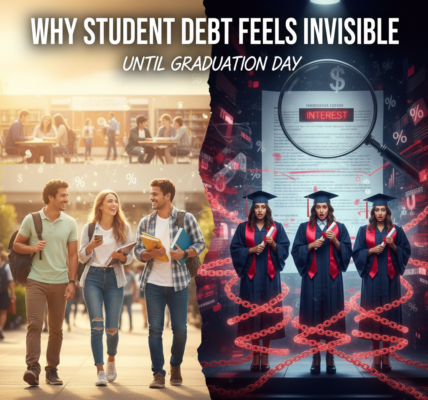
College life exists in a strange emotional double exposure.
On one side: lectures, friendships, late nights, ambition.
On the other: growing balances, interest rates, emails from loan servicers written in a language that feels deliberately cold.
Students learn to live with cognitive dissonance. They chase dreams during the day and quietly worry at night. Many begin to measure their worth in terms of “return on investment.” Passion is slowly replaced by calculation.
Is this major practical enough?
Will this job pay enough?
Am I allowed to fail?
Fear enters softly.
The Moment It Becomes Real
For some, it happens at graduation.
For others, it hits with the first repayment notice.
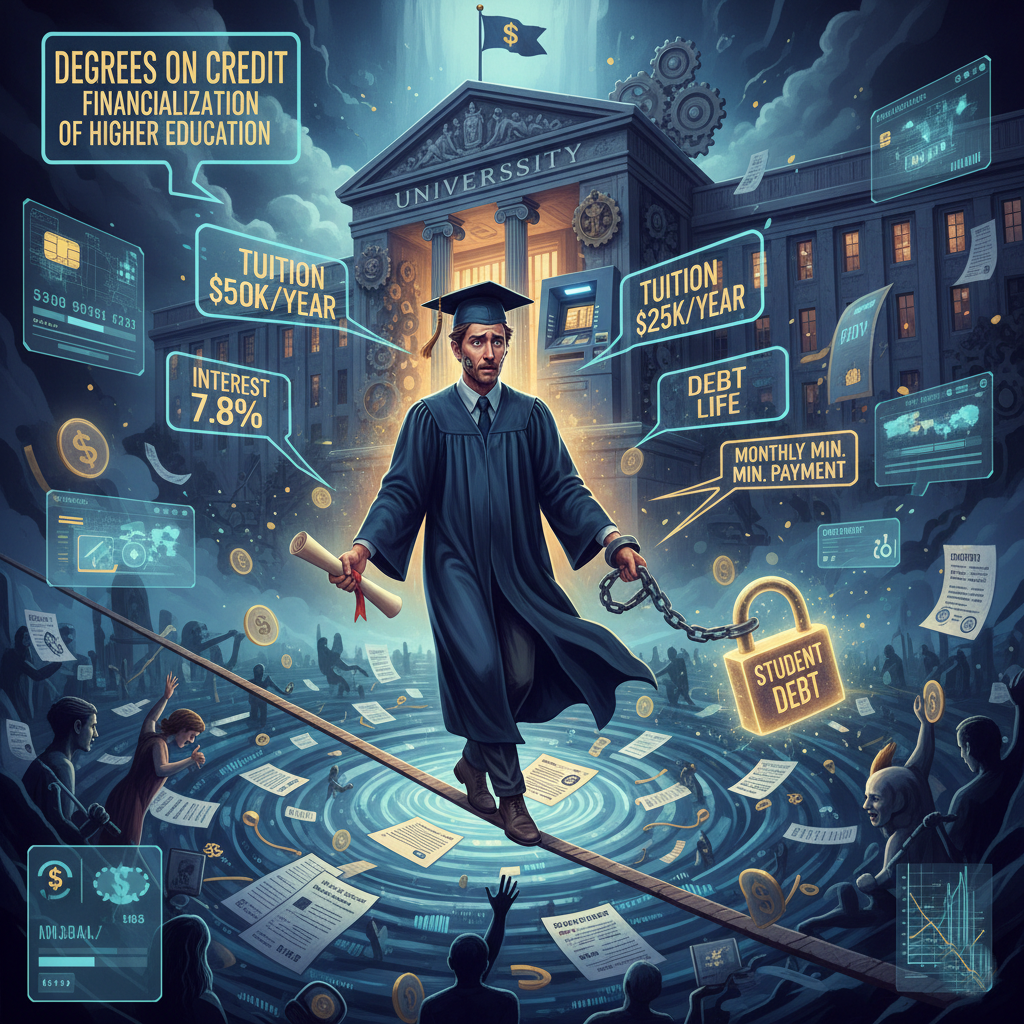
The number is no longer theoretical. It is real. It is exact. And it is attached to their name.
What was once framed as opportunity now feels like obligation. Choices narrow. Risks feel irresponsible. Dreams are filtered through monthly payments.
This is where shame often appears—not because students made a mistake, but because society taught them that debt is a personal failure rather than a structural outcome.
The Emotional Cost No One Calculates
Student debt is rarely discussed in emotional terms, yet its impact is deeply psychological.
It delays milestones. It reshapes relationships. It fuels anxiety and quiet resentment. Some graduates avoid going home. Others avoid opening emails. Many avoid talking about money altogether.
The heaviest burden is not the loan itself, but the feeling of being trapped in a future that was supposed to feel free.
Still Trying to Believe
And yet—hope does not disappear. It adapts.
Loan college students continue to work, to plan, to imagine something better. They learn resilience, not because they chose to, but because they had to. They carry ambition and exhaustion at the same time.
Their journey is not a failure of effort. It is a reflection of a system that asks young people to mortgage their emotional peace before they fully understand the cost.
Beyond the Balance Sheet
To understand student loans only as numbers is to miss the story entirely.
This is not just about debt.
It is about trust.
It is about the moment hope quietly turns into pressure.
It is about a generation learning—too early—that dreams often come with interest.
And still, they keep going.
Because even under the weight of debt, hope refuses to fully let go.