
When Education Is Sold Like a Call Center Product
The first sign is the phone call.
Not from a professor.
Not from an admissions office you contacted.
But from a cheerful stranger who already knows your name, your age, and exactly which insecurity to press.
They don’t ask what you want to study.
They ask when you want to start.
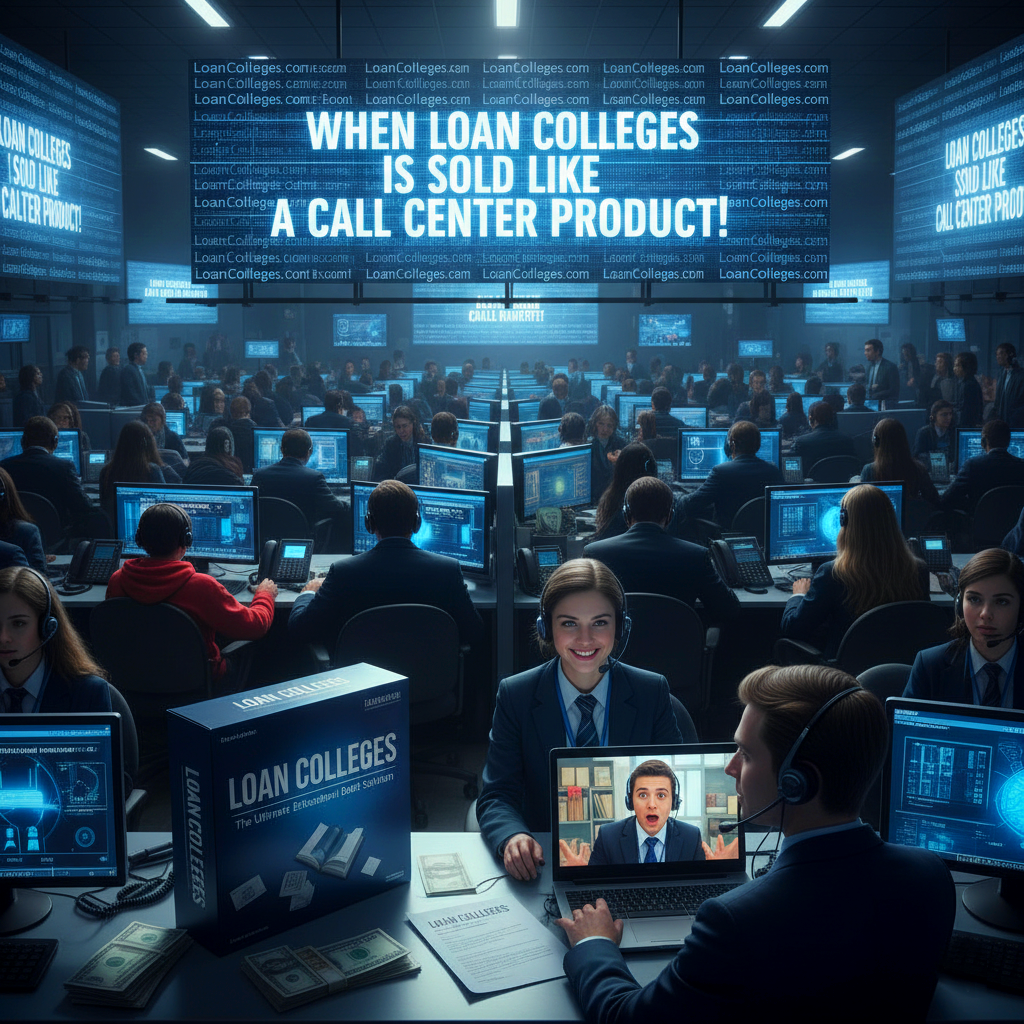
Welcome to the era where education is sold like a call center product.
The Sales Floor You Never See
In many loan-driven colleges, enrollment offices look less like academic institutions and more like sales floors. Recruiters sit in rows, headsets on, dashboards glowing, quotas looming.
Their job isn’t to mentor.
It’s to convert.
Calls are recorded. Scripts are refined. Performance is measured in enrollments, not graduations. Every hesitation from a prospective student is treated like an objection to overcome.
“I can’t afford it.”
“That’s what loans are for.”
“I need time to think.”
“Classes are filling up fast.”
Scripts Over Substance
Sales scripts prioritize emotion over information. Recruiters are trained to:
- identify fear (career stagnation, age, job insecurity)
- amplify urgency
- minimize long-term costs
- frame loans as temporary and painless
Tuition is rarely discussed in full. Debt is broken into monthly numbers that sound manageable. Outcomes are implied rather than guaranteed.
Education becomes a promise, not a plan.
From Counselor to Closer
The title “admissions counselor” suggests guidance. In practice, the role often resembles that of a closer in telemarketing.
Many recruiters have little academic background in the programs they sell. Some are trained in sales before education. Their loyalty is to metrics, not mentorship.
Once enrollment is complete, the relationship ends. Support transfers to automated systems, generic advisors, and email inboxes that rarely respond.
The product has been delivered. The sale is complete.
Why This Model Works
Call-center education thrives because it targets moments of vulnerability:
- career transitions
- layoffs
- financial anxiety
- social pressure to “level up”
It offers certainty in uncertain moments.
A start date. A plan. A sense of forward motion.
For someone stuck or scared, that’s incredibly powerful.
The Cost of Speed
Sales-driven education doesn’t allow space for reflection. Slowing down invites comparison. Comparison threatens conversion.
So everything is urgent:
- enrollment deadlines
- limited seats
- “last chance” scholarships
- fast-tracked approvals
The faster you move, the less likely you are to ask questions that matter.
When the Call Ends, the Debt Begins
Once classes start, reality sets in. Course quality may be uneven. Career support may be minimal. Credits may not transfer. Employers may be indifferent.
But the loan is real. Interest accrues quietly. Dropping out doesn’t cancel the bill—it just removes the justification.
At this stage, students aren’t customers anymore.
They’re account holders.
What Gets Lost
When education is sold like a call center product:
- trust erodes
- learning becomes secondary
- students are treated as revenue streams
- failure is individualized, never systemic
Most damaging of all, the idea of education as a public good is replaced by education as a transaction.
Reclaiming Education From the Sales Floor
Education should be slow enough to question, transparent enough to compare, and affordable enough to refuse debt as the default.
That requires:
- separating enrollment from loan approval
- measuring schools by outcomes, not headcount
- protecting prospective students the way consumers are protected elsewhere
Until then, the headset stays on, the scripts keep improving, and the calls keep coming.
And somewhere, another student answers the phone—thinking they’re choosing an education, when they’re really being sold one.